
The Documents and Drills We Use to Brief New Control Room Staff
Priya Nair
6 min read
Why the method matters more than the manual
Most newcomers to a control room do not fail because they lack talent. They struggle because the information they are given arrives in the wrong shape: a forty-page equipment manual, a verbal tour on the morning of a show, or a colleague's hurried advice over talkback. When we write Control Room Training Material, the first decision is not what to include but what form each piece of knowledge should take, because the form decides whether it is read at all.
Over the years we have settled on a small set of tools that we use again and again. None of them is complicated. Each one is built to be opened at a desk during a quiet hour, and then again, folded in half, during a live transmission. That second use is the test we apply to every page we write.
As the audio and sync engineer here, I come at this from the sound side, so some of my examples lean towards the audio chain. The same methods apply to vision mixers and directors, and I will say where they differ.
The one-page role sheet
The backbone of our material is a single page for each seat: vision mixer, sound operator, director, graphics, and so on. It lists what that person is responsible for, which controls they touch, who they take instructions from and who they must warn when something goes wrong. We keep it to one side of paper on purpose, because a sheet that needs scrolling will not be glanced at mid-show.
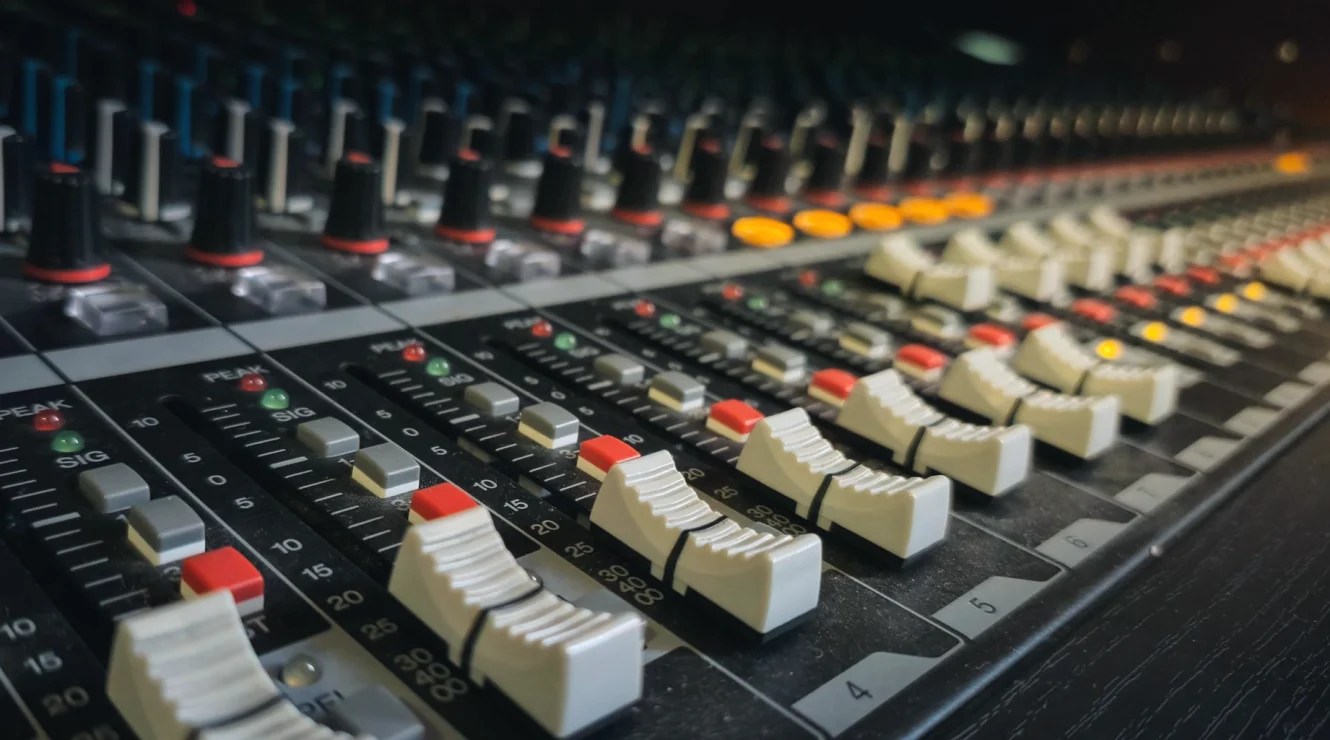
The wording is plain and the verbs are active. Instead of describing the mixing desk, the sheet says what the operator does with it at each stage of a programme: line up sources, check levels against the rundown, hold the fader positions agreed at rehearsal. Anything that is only occasionally needed is pushed to a second page, so the first stays readable under pressure.
Daniel Whitcombe, our training editor, reviews every role sheet against how the team actually works, not how the equipment brochure says it should be used.
- Responsibilities in five or six short lines
- Controls the person touches, named as they appear on the desk
- Who gives instructions and who needs warning
- Three faults that happen most often, and the first response
Annotated rundowns instead of abstract theory
A rundown is the document every control room already trusts, so we teach through it. We take a typical running order and add margin notes: where the vision mixer should have the next source ready, where the sound operator needs a microphone open before the presenter speaks, where a switch to a recorded insert changes the audio routing. A new starter reads the show as it will happen rather than as an equipment list.
This method works because it ties each instruction to a moment in time. Saying that a radio mic must be live early is forgettable. Seeing the note beside a specific line of the running order, with the reason written next to it, is what people remember at two minutes to transmission.
We keep the notes short and avoid long explanations in the margins. The reasoning sits in a short paragraph below the rundown, so the page stays scannable.
Signal-path drills on paper first
Before anyone touches a live desk, we ask them to trace a signal by hand. We provide a simplified diagram of the studio: a camera and a microphone on one side, the programme output on the other, with the switcher, the audio desk and the routing in between. The trainee follows one picture and one sound from source to output and marks every place where delay could be added or a level could be lost.
This is where my own work on lip-sync fits in. An operator who understands that audio and video may take different routes, and different amounts of time, will notice a sync drift sooner and describe it more usefully to an engineer. The paper drill costs nothing and takes under an hour, yet it changes how people listen to what is on air.
We follow it with a short written question set, answered in the trainee's own words, which tells us what the briefing has not yet made clear.
Shadowing notes and the rehearsal log
Reading only goes so far, so we write material for the days a newcomer spends sitting beside an experienced operator. The shadowing notes give the observer a short list of things to watch for: how the operator prepares before the countdown, which fader or button is touched first when a cue arrives, what is said over talkback and in what order. The observer fills in the margins and returns the sheet, which becomes a record of what they noticed.
The rehearsal log is the other half. It is a simple table, kept by the team, of what went wrong in rehearsal and what the agreed fix was. We encourage teams to hand it to every new joiner, because it captures local habits that no generic guide can cover, such as a camera that always needs a re-check or a microphone channel that is patched oddly.
In these darker autumn weeks, when many productions bring in new seasonal crew, these two documents save a surprising amount of repeated explanation.
Keeping the material honest
Training material goes out of date quietly. A desk is replaced, a routing changes, a director prefers a different call order, and the old sheet keeps circulating with wrong information on it. We build a review habit into every set we write: each document carries the date it was last checked against the real room, and a named person who owns it.
We also ask the people who use the material to mark anything they found confusing, and we treat those marks as the most valuable feedback we receive. A sentence that three trainees misread is a sentence that needs rewriting, however correct it was technically.
Nothing here requires special software. A shared folder, a consistent template and an owner for each page are enough to keep a set of briefing documents accurate for years.
- Last-checked date on every page
- One named owner per document
- Trainee comments collected after each show
- Retire sheets when equipment changes
The tools behind good control room training are modest: a role sheet that fits on one page, a rundown with margin notes, a paper signal-path drill, shadowing notes and a rehearsal log that someone keeps current. None of them replaces time spent in the room, but together they let a new vision mixer, sound operator or director arrive prepared and start contributing sooner, with fewer surprises on the night.
Priya Nair
Audio and Sync EngineerPriya investigates latency and audio sync faults and documents the results for clients.